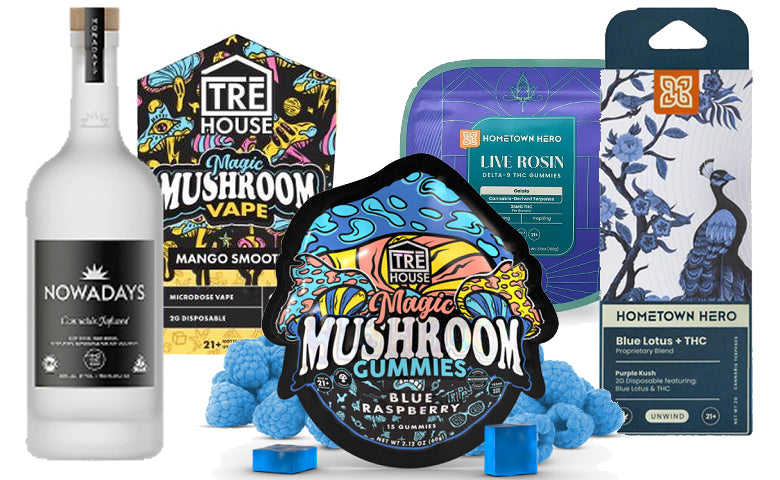

The landscape for hemp-derived consumables is facing a new type of regulatory pressure in the Midwest. Rather than fighting cannabinoids through criminal code or drug enforcement agencies, the state of Nebraska is utilizing its agricultural and food safety frameworks to implement a sweeping ban. Under the Nebraska Department of Agriculture's (NDA) newly proposed Adulterated Food Product Regulations, the state is moving to classify any food product containing tetrahydrocannabinol (THC) as strictly adulterated — and therefore illegal to sell.
At Ethereal Gold Dispensary, we carefully track how different state agencies interpret the 2018 Farm Bill. Nebraska’s tactical shift to food safety laws represents a growing trend where states use administrative rules to bypass the legislative process and clear hemp edibles from standard retail shelves.
The Zero-Tolerance Threshold: Redefining Adulterated Food
The core of the Nebraska regulation rests in Section 002, which implements the Nebraska Pure Food Act. Under these rules, food is officially deemed "adulterated" if it contains any amount of a substance determined to be injurious to health.
The state has explicitly added the following cannabis and mushroom compounds to this zero-tolerance list:
- All Tetrahydrocannabinols: The rule bans all natural, synthetic, or chemically converted analogues of THC. This includes Delta-8 THC, Delta-9 THC, Delta-10 THC, Delta-11 THC, THCA, and any precursor acids or equivalents.
- Psychoactive Mushrooms: The regulations also classify psilocybin, psilocin, and any natural or synthetic analogues — specifically calling out 4-AcO-DMT — as adulterants.
- Unapproved Additives: Any compound not explicitly "Generally Recognized as Safe" (GRAS) by the United States Food and Drug Administration (FDA) is deemed unapproved for human consumption.
Crucially, the regulations define "Food" broadly. It includes raw, cooked, or processed edible substances, beverages, ingredients, chewing gum, and explicitly names edible gummies and tinctures. By labeling these items as adulterated food, Nebraska is giving its food sanitarians the immediate authority to issue stop-sale orders and pull products from convenience stores, grocers, and smoke shops across the state.

The Misbranding Trap
In addition to the adulteration rules, Section 004 introduces strict guidelines regarding Misbranding. Under the Nebraska Pure Food Act, a food product is considered misbranded if its label indicates that it contains any of the prohibited cannabinoids or mushroom compounds and gives the impression that those substances are legal food products under state or federal law.
This creates a regulatory trap for retailers. If a product accurately lists Delta-8 or Delta-9 THC on its ingredient panel to remain transparent, it is immediately flagged as misbranded and adulterated. If it hides those ingredients, it violates standard food labeling laws.
The Ethereal Gold Standard: Why Accountability Extends Past Loopholes
At Ethereal Gold Dispensary, we believe that the current administrative crackdown in states like Nebraska is a direct response to "bad actors" selling completely untested, psychoactive products in standard retail spaces without age verification or chemical transparency. When unregulated "gas station" treats cause public health concerns, state departments of agriculture resort to broad, zero-tolerance policies.
This is why we maintain the Ethereal Gold Standard. Long before agricultural boards began drafting food safety bans, we mandated complete, full-panel lab testing for every single product we distribute. We verify the precise cannabinoid profile, ensure absolute homogeneity, and guarantee that our items are entirely free from heavy metals, residual solvents, and residual processing catalysts.
We now face the unfortunate backlash from so many bad actors in the industry and hope that the cap limit is removed or greatly altered before this bill gains any traction. While we fully support age-gating and strict sanitation inspections, classifying federally compliant, full-spectrum hemp products as "adulterated food" punishes responsible adult consumers. It restricts access to safe, transparently manufactured wellness options and disrupts an industry built on legitimate botanical extraction.
FAQ
Does Nebraska's new regulation completely ban CBD products?
The draft regulations target tetrahydrocannabinols (THC) and their precursors. Isolated CBD products that contain 0.0% THC and are manufactured using FDA-compliant food safety standards may avoid the "adulterated" classification, provided they contain no other restricted cannabinoids.
What happens if a business is caught selling THC gummies in Nebraska?
The Nebraska Department of Agriculture can issue an immediate stop-sale order, forcing the retailer to pull the inventory from shelves. Retailers have 15 days to request an immediate administrative hearing to contest the order.
Why are synthetic mushroom compounds like 4-AcO-DMT mentioned?
Many non-psilocybin mushroom chocolates on the open market have been found to contain 4-AcO-DMT, a synthetic psychedelic. Nebraska is proactively using its food safety rules to ban these research chemicals from edibles entirely.
Does this rule apply to THC-infused beverages and sodas?
Yes. The regulation explicitly applies to raw or processed edible substances, ingredients, and beverages intended for human consumption.
When do these Nebraska Department of Agriculture regulations take effect?
The regulations are currently in a public comment phase following a formal Notice of Rulemaking Hearing. Interested parties have until June 17, 2026, to submit written feedback before the state moves forward with final implementation.